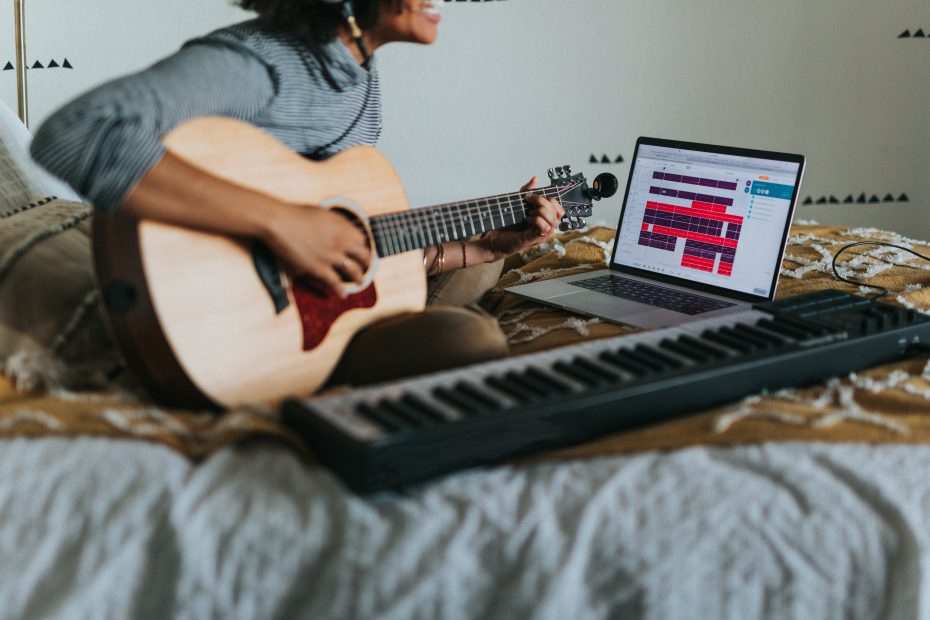

Training your singing voice at home has never been easier. With today’s technology, at home singing lessons are accessible to anyone with a smartphone or computer. If you’re wondering how to self train your singing voice, the key is a mix of consistent practice, using the right tools, and a bit of patience. In this guide, we’ll explore how adult beginners can improve their singing from home using mobile apps, browser-based platforms, and simple exercises.
Getting Started: Foundations of Self-Training
Before diving into apps, start with the basics. Even without a teacher, you can lay a strong foundation by focusing on posture, breathing, and vocal warm ups for beginners. Remember, vocal warm-up is what you should do before each session, like an athlete warming up before exercise. Warming up protects your voice and improves your tone. Some simple vocal exercises to improve singing include lip trills, gentle humming, and sirens (gliding from low to high notes). These get your vocal cords ready and reduce the chance of strain.
Basic Vocal Warm-Ups for Beginners:

- Humming Exercises: Begin by humming a comfortable note and then hum scales up and down. This relaxes your vocal cords and improves tone.
- Lip Trills: Gently blow air through closed lips to create a buzzy sound (like a motorboat). Slide up and down in pitch while doing this. Lip trills are fun and help loosen your lips and jaw.
- Simple Scales on a Vowel: Pick a vowel (like “la” or “ma”) and sing a five-note scale up and down. Start in a mid-range key and go a bit higher or lower each time. This builds control and pitch accuracy.
Doing these vocal warm ups for beginners daily will gradually expand your range and control. They’re often included in singing apps and courses because they are fundamental for improving your voice.
Apps to Learn How to Sing: Your Pocket Vocal Coaches
Mobile apps put a vocal coach in your pocket: they listen to your singing and give instant feedback, so you know — rather than guess — whether you hit the note. That real-time feedback loop is the single most valuable thing an app adds to at-home training, and it’s worth choosing an app that has it.
Which app is a question of learning style — some are built around adaptive AI coaching, others around structured lessons, songs, or ear training — and we compare all of them honestly in our guide to the best apps to learn singing. For at-home training, the practical advice is simpler: pick one with real-time pitch feedback, and use it consistently.
Online Singing Lessons for Adults: Browser-Based Platforms

While mobile apps are great for quick practice, browser-based platforms offer a more structured approach for at-home training. One standout is Singing Carrots — available on iPhone (App Store) and in any web browser.
Singing Carrots is a vocal training platform used by over 300,000 singers, built around an AI vocal coach that listens to you sing in real time and adapts every session to your voice — planning exercises around your range, adjusting difficulty as you go, and remembering your progress between sessions. Beyond pitch, the coach also analyzes voice quality: airiness, ring, vibrato, and loudness.
It’s the only singing app with published outcome data: across 2,000+ singers, beginners improved their pitch accuracy by +16.5 percentage points in four weeks. Around the coach sit its free tools — the vocal range test, pitch accuracy test, and real-time pitch monitor — plus song search that matches songs to your measured range. For at-home training specifically, that combination matters: the free tools tell you where your voice is, and the coach turns that into a session — no teacher required to know whether you hit the note.
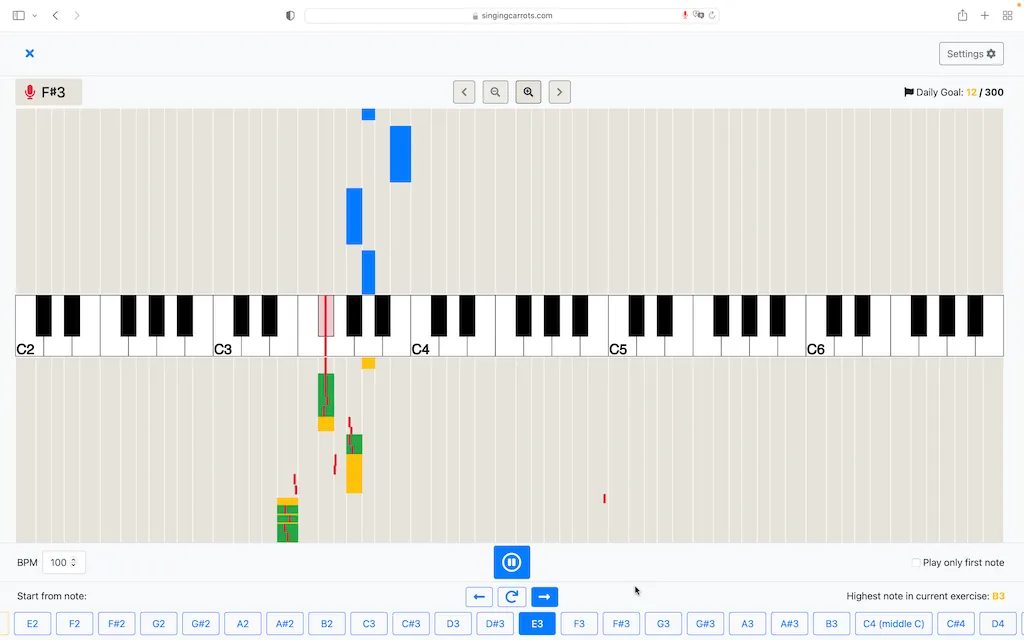
Importantly, Singing Carrots is designed for structured progress. It doesn’t just throw random exercises at you. The platform includes a 21-lesson online singing course called “All-Round Vocalist” that guides you from basics to more advanced techniques. Each lesson comes with a video and reading material, often introducing new warm-ups and exercises. The idea is to simulate a curriculum for at home singing lessons. The site even suggests a study plan: for beginners, do about one lesson per week and practice 3–5 times per week with the pitch training tool. This kind of structure gives you a clear path to follow and helps you stay consistent. As you practice, the pitch training tool tracks your progress and boosts your motivation by showing improvements in your pitch accuracy and range over time.
Of course, Singing Carrots isn’t the only online option. There are video-based courses and other platforms out there (from formal programs like 30-Day Singer to YouTube tutorials). The difference is that Singing Carrots combines the best of both worlds: the interactive feedback of a dedicated app, plus the step-by-step guidance of an online course. This makes it ideal for adult learners who want a bit of structure without hiring a personal coach. You get the feeling of online singing lessons for adults that you can follow at your own pace, with tools that keep you accountable.
Making the Most of Your At-Home Practice
No matter which app or platform you use, success comes from consistent, mindful practice. Set aside regular times in the week for your at home singing lessons. Start each session with those warm-ups (your future self will thank you!). Then use your chosen app or online tool to do focused exercises – for example, pitch matching with a vocal pitch trainer game, or practicing a song while an app checks your accuracy. Pay attention to the feedback these tools give you. If an app shows you tend to sing a certain note flat, you’ll know to work extra on that note. Many apps and platforms also let you track progress – use this feature! It’s motivating to see your improvement in black-and-white (or in graph form).
Finally, keep it fun and balanced. Mix technical exercises with singing actual songs you enjoy. Technology can guide you, but singing is an art – so enjoy the music! The convenience of these tools means you can learn anytime and anywhere, but remember to sing with emotion, not just precision.
Ready to start your singing journey? With the variety of apps and online tools available, you can improve your voice from the comfort of home. Give Singing Carrots a try for a structured, game-like experience, or explore other mobile apps to find what suits you best. The most important step is to start practicing. So grab your phone or open your laptop, and let’s get singing! Happy singing, and see you on the leaderboards!

Unleash 1 Million Voices – Singing Carrots Mission
Hi. I’m Sergey, founder of Singing Carrots. I’m on a mission to unleash one million voices. Bu…
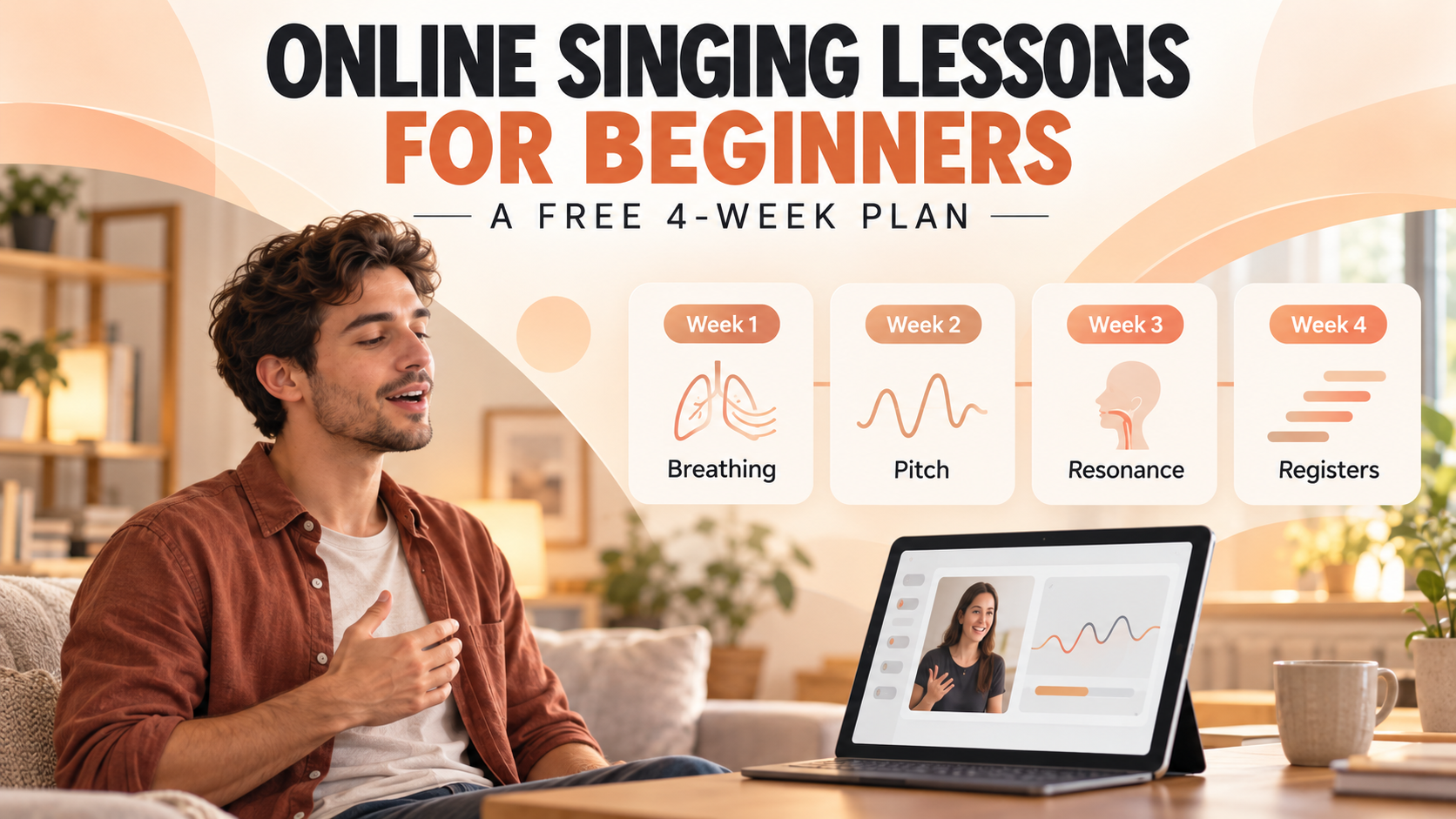
Online Singing Lessons for Beginners: a 4-week plan
You don’t need a teacher, a studio, or a good voice to start. You need about 20 minutes a day,…
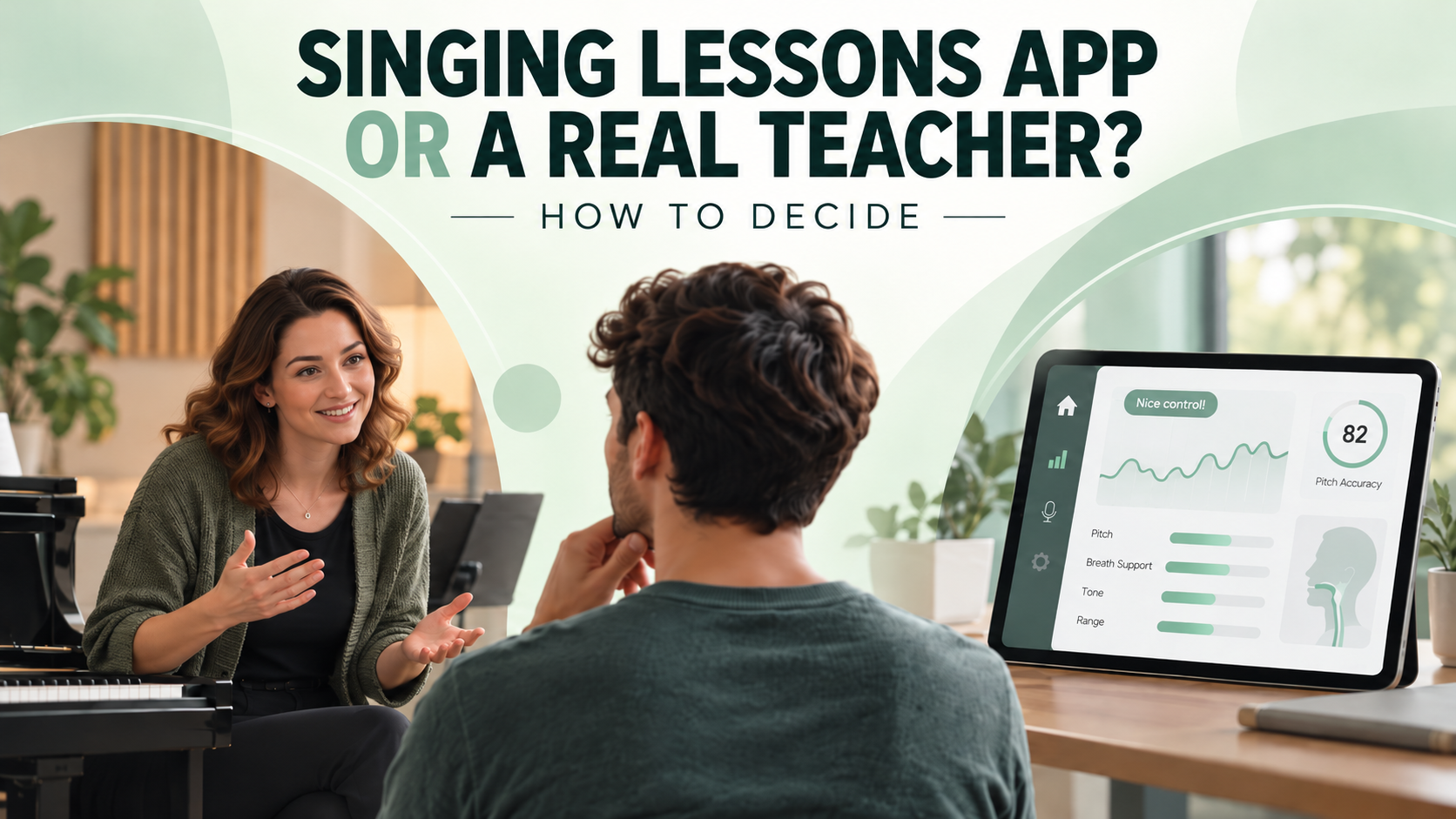
Singing Lessons App or a Real Teacher? How to decide
The short answer: always first go to a teacher if something hurts when you sing, if you’ve pla…
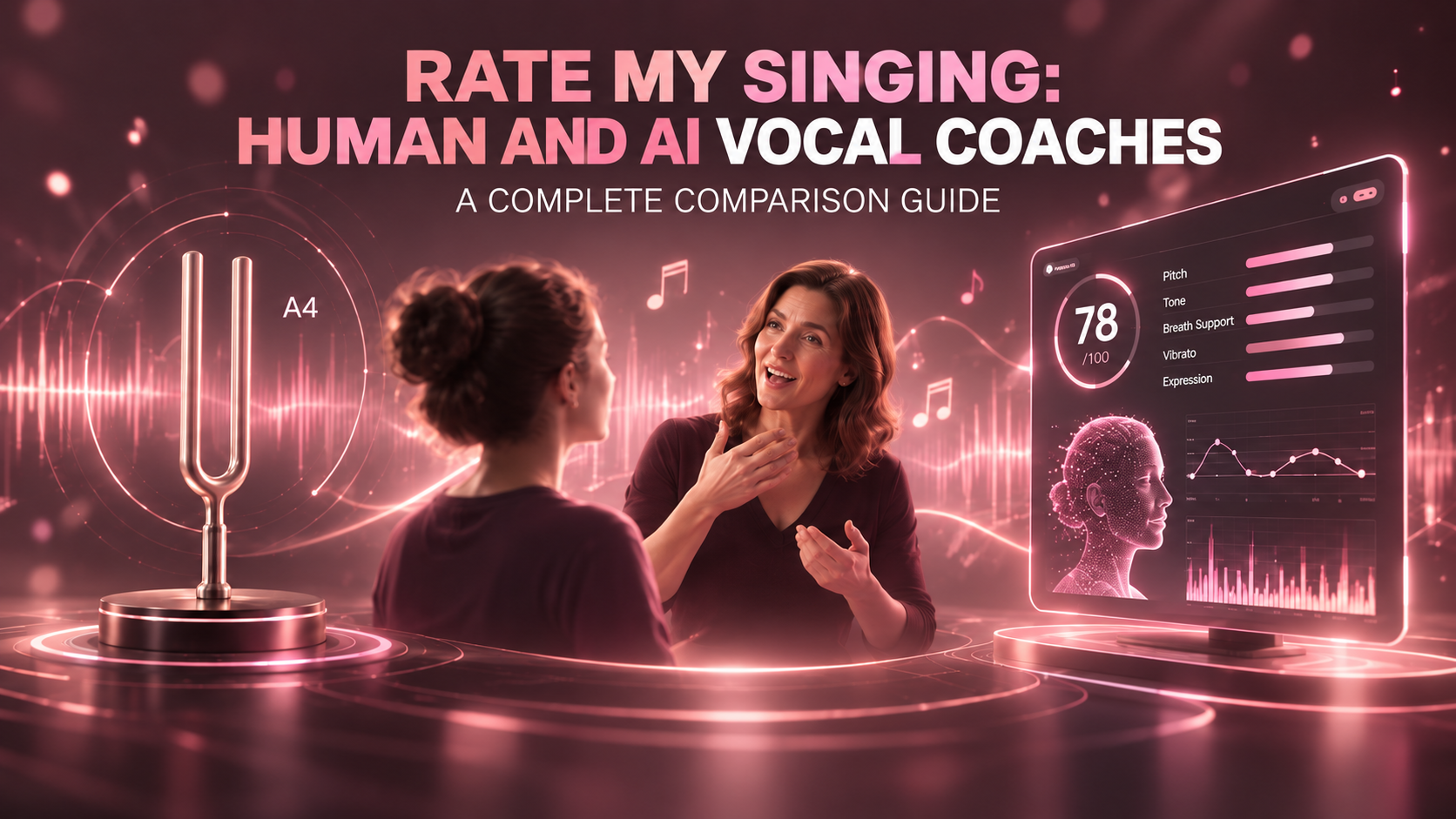
Rate My Singing: Apps, AI Tools, and the Ways Nobody Mentions
The fastest way to get your singing rated is a free pitch accuracy test: two minutes, in your browse…
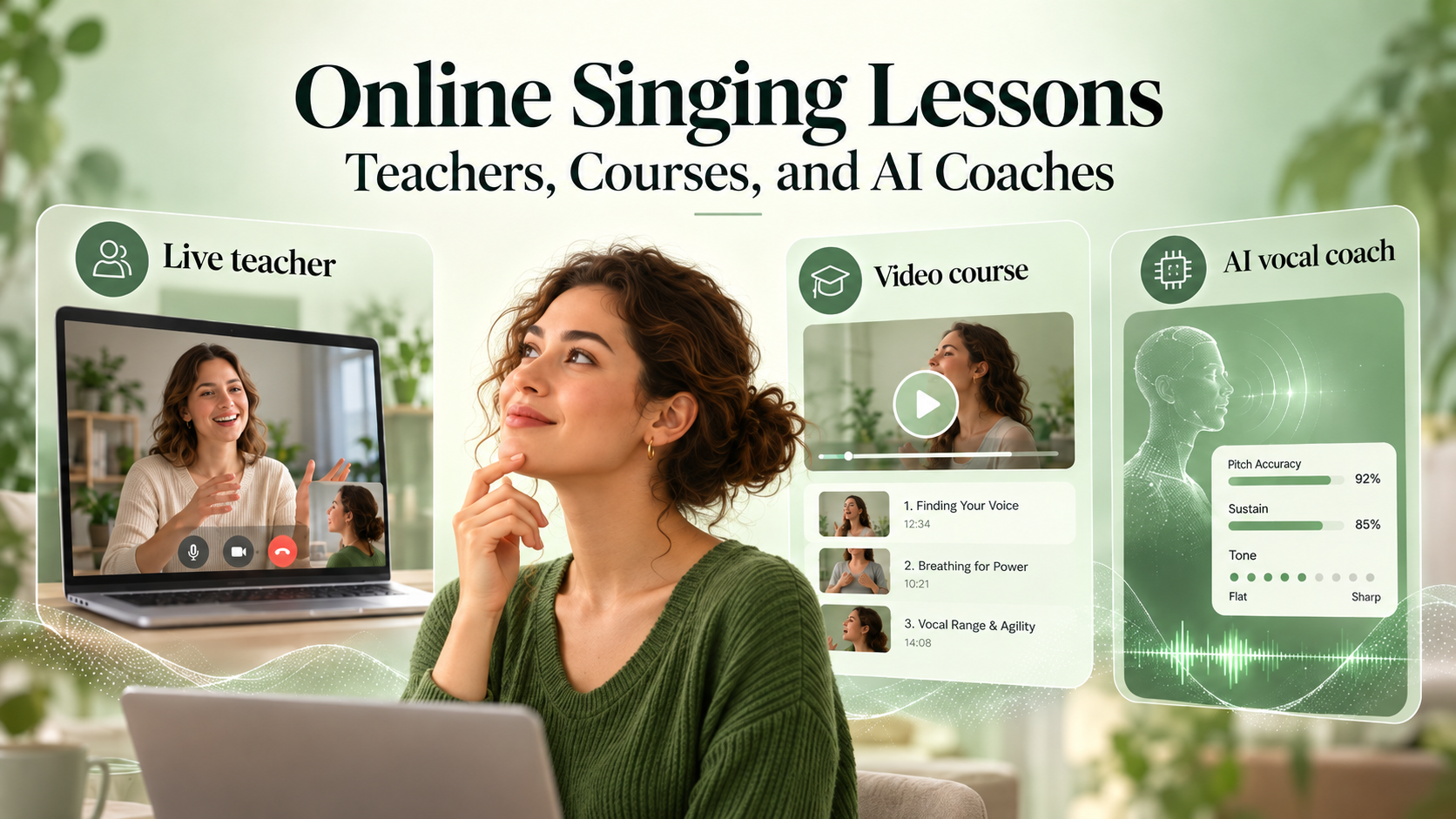
Online Singing Lessons: The Guide to Teachers, Courses and AI Coaches
Updated October 2026 Online singing lessons come in three forms : a live teacher over video call, a …
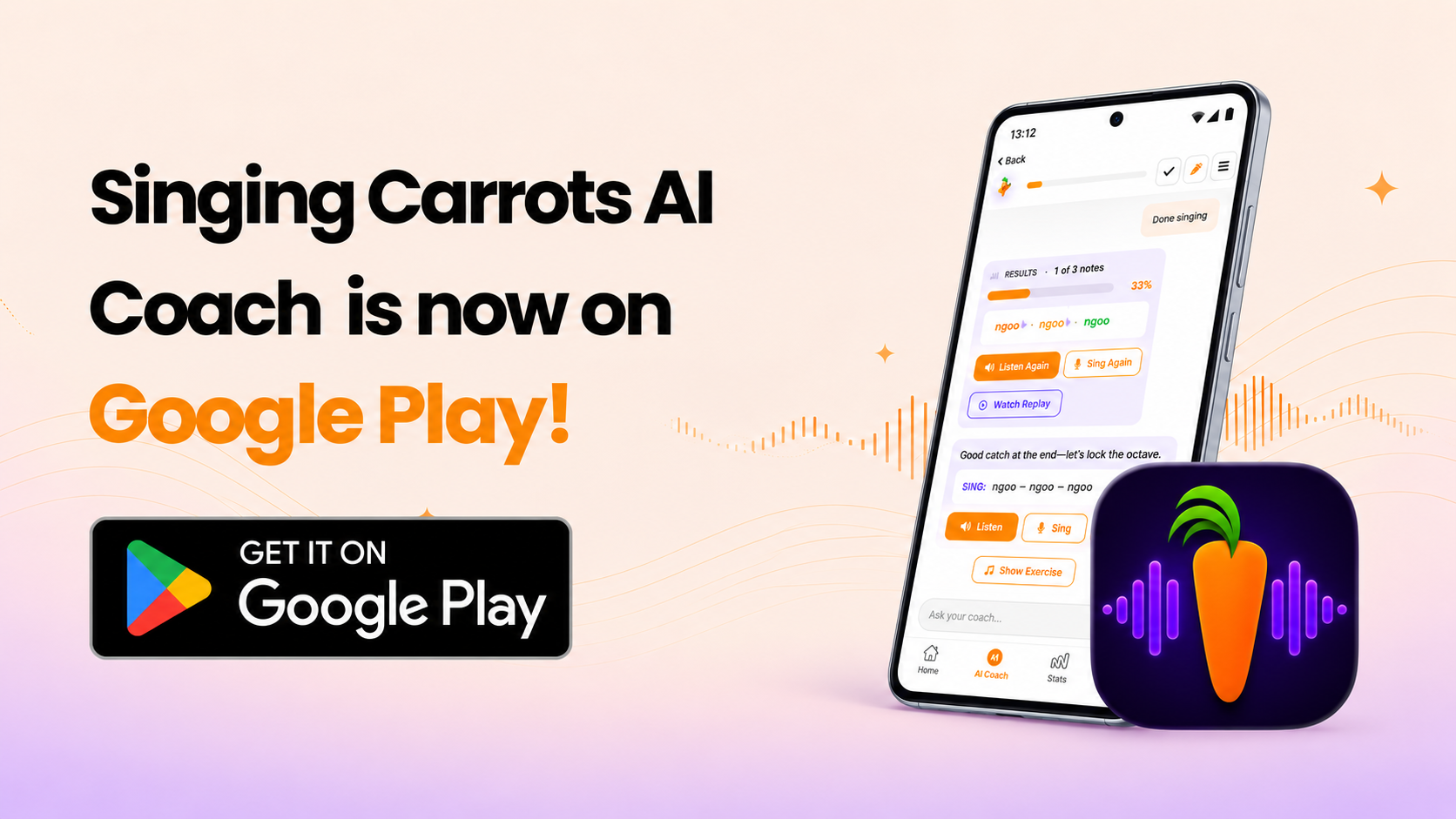
Singing Carrots AI Vocal Coach now on Android
We’ve heard it since the day we launched AI Coach on mobile browsers: “When is this getting its own …
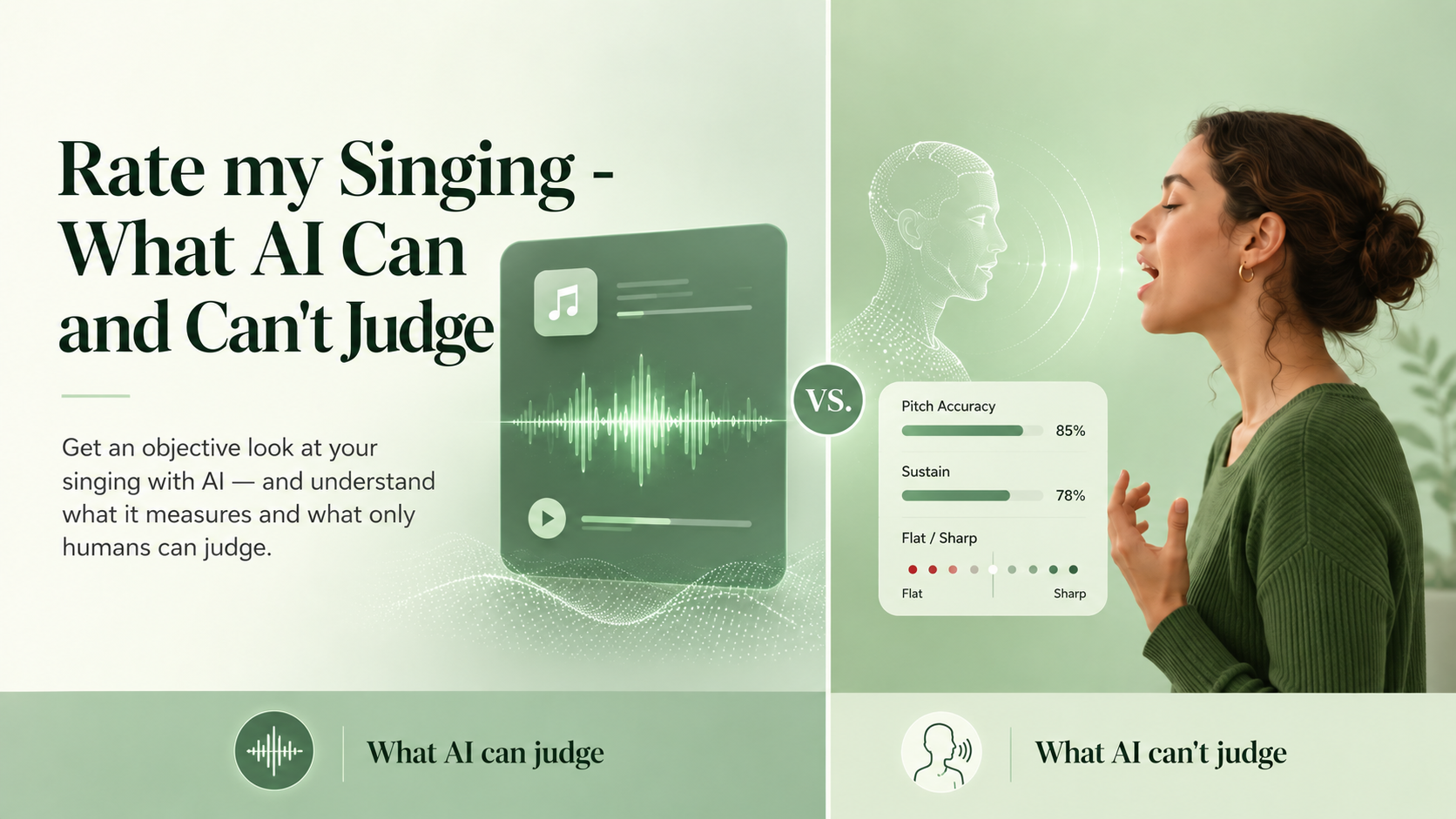
Rate My Singing: What AI Can and Can’t Judge
Want your singing rated? The honest starting point: a chatbot can’t hear you. What can actuall…
FAQs
What is Singing Carrots?
Singing Carrots is an online singing training platform that helps beginners improve pitch, vocal range, and accuracy through interactive exercises. It offers pitch training games, a vocal range test, guided lessons, and song-based practice with real-time feedback.
Where can I learn singing for free?
You can learn singing for free using a mix of online resources such as free singing apps, browser-based tools, video tutorials, and practice exercises. Many platforms offer free pitch training, vocal warm-ups, and beginner lessons that are enough to get started.
Can I teach myself to sing at home?
Yes. Many people successfully teach themselves to sing at home by practicing regularly and using online tools for feedback. With proper warm-ups, pitch exercises, and structured practice, self-training can be very effective for beginners.
Is there a free singing app for beginners?
Yes. Several singing apps offer free versions that include basic pitch training, vocal exercises, and feedback. These apps are useful for learning fundamentals like staying on pitch and improving control, especially when paired with consistent practice.
What are the six main voice types?
The six most common voice types are:
- Soprano
- Mezzo-soprano
- Alto
- Tenor
- Baritone
- Bass
Your voice type depends on your vocal range and where your voice feels most comfortable, not just how high or low you can sing.
What is the rarest singing voice type?
Among female voices, true contralto is considered the rarest. Among male voices, basso profundo is uncommon. However, voice type matters less than learning to sing within your comfortable range.
Do I need to know my voice type to start singing?
No. Beginners don’t need to know their exact voice type right away. It’s more important to sing comfortably, avoid strain, and practice songs that fit your current range. Voice type becomes more useful as you gain experience.